About Us
Bela Investment Company Pvt. Ltd, we are an Importer and Distributor/Retailer of Chemical Fertilizer, Agricultural Equipment’s in Nepal. We were founded in 2015 and have since grown to a team of 22 employees, serving over 10,000 farmers across the country.
In the 1970s, the government of Nepal established the Nepal Fertilizer Corporation (NFC) to produce and distribute chemical fertilizers domestically. This move was aimed at reducing the country’s dependence on imported fertilizers and promoting domestic agricultural production.
During the 1980s, the use of chemical fertilizers in Nepal increased significantly, as farmers began to recognize the benefits of increased crop yields and productivity. However, concerns also began to emerge about the environmental and health impacts of chemical fertilizers, particularly as the quality of the fertilizers being sold in the market was often poor.
Today, chemical fertilizers remain an important tool for Nepalese farmers to increase crop yields and productivity. However, there is also growing awareness of the environmental and health impacts of their use, and efforts are being made to promote sustainable and organic farming practices.
A variety of chemical fertilizers
The majority of these fertilizers are imported from countries like India, China, and other Southeast Asian nations. The government of Nepal also offers subsidies and other incentives to promote the import and use of chemical fertilizers by farmers. However, there is also a growing interest in promoting the use of organic and natural fertilizers in Nepalese agriculture.
Our Mission / Vision
To help farmers grow more food sustainably and efficiently by providing them with high-quality fertilizers that improve crop yields and promote soil health.
To cater agricultural tools & equipment’s to farmers.
The company is prioritizing to supply chemical fertilizer to farmers on time and offering excellent customer service.
Farmers will be educated about the proper use of fertilizers to minimize the environmental impact and reduce their dependency on external sources.
The company will strive to develop new and improved fertilizer products that are more effective, efficient, and environmentally friendly.
Our customized fertilizers are based on the specific nutrient requirements of different crops and soil types. This approach aims to increase crop yields while minimizing the use of excess fertilizers that can cause environmental damage.
Will ensure that chemical fertilizer is used in a sustainable and responsible manner, to support the long-term goals of food security, poverty reduction, and sustainable development in the country.
Main Products & Services
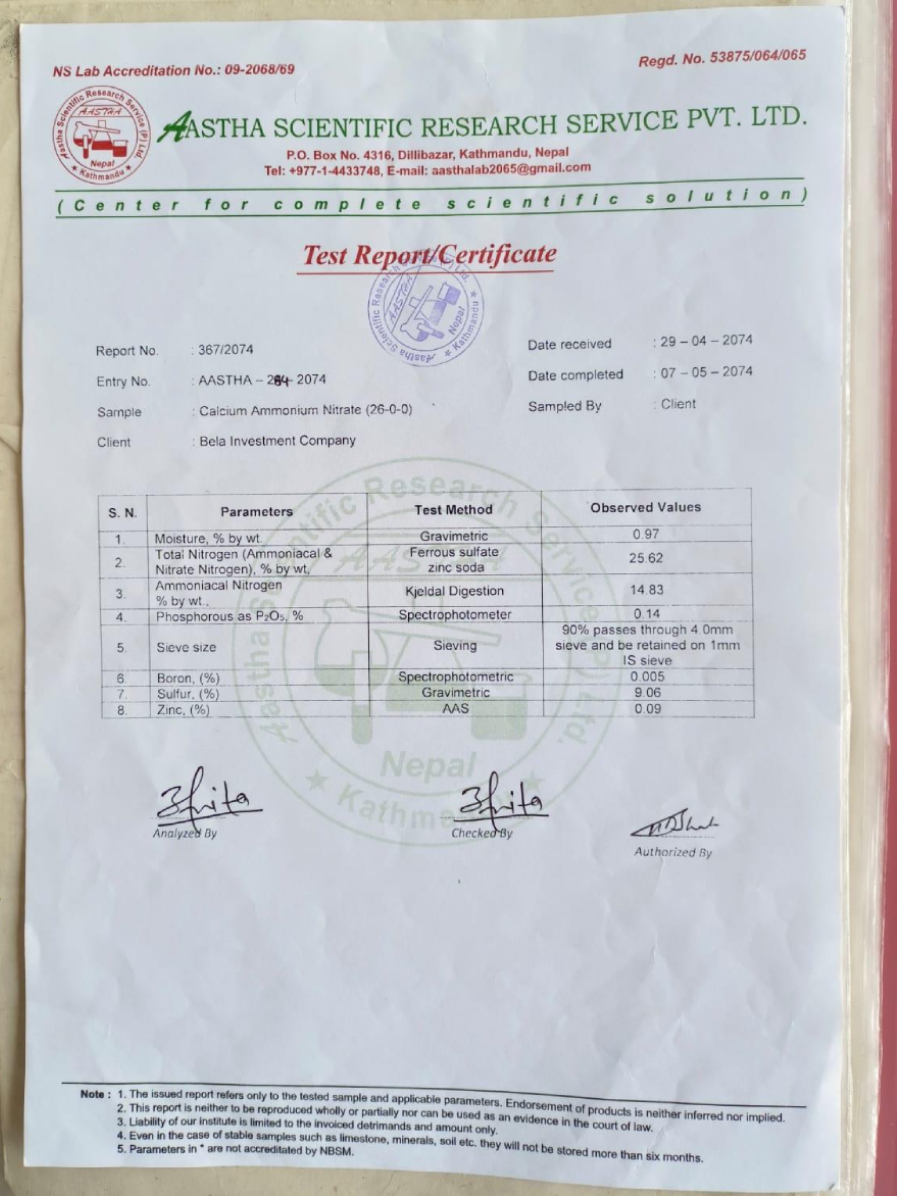
Chemical Fertilizer (26-0-0): 26-0-0 is a common formulation of nitrogen fertilizer, which means it contains 26% nitrogen and no phosphorus or potassium. It is also known as ammonium nitrate or urea ammonium nitrate (UAN) fertilizer. Nitrogen is an essential nutrient for plant growth, and it is required in large quantities to support plant growth and development. Nitrogen fertilizers such as 26-0-0 are commonly used in agriculture to increase crop yields by promoting healthy plant growth and improving the quality of the harvested crop.
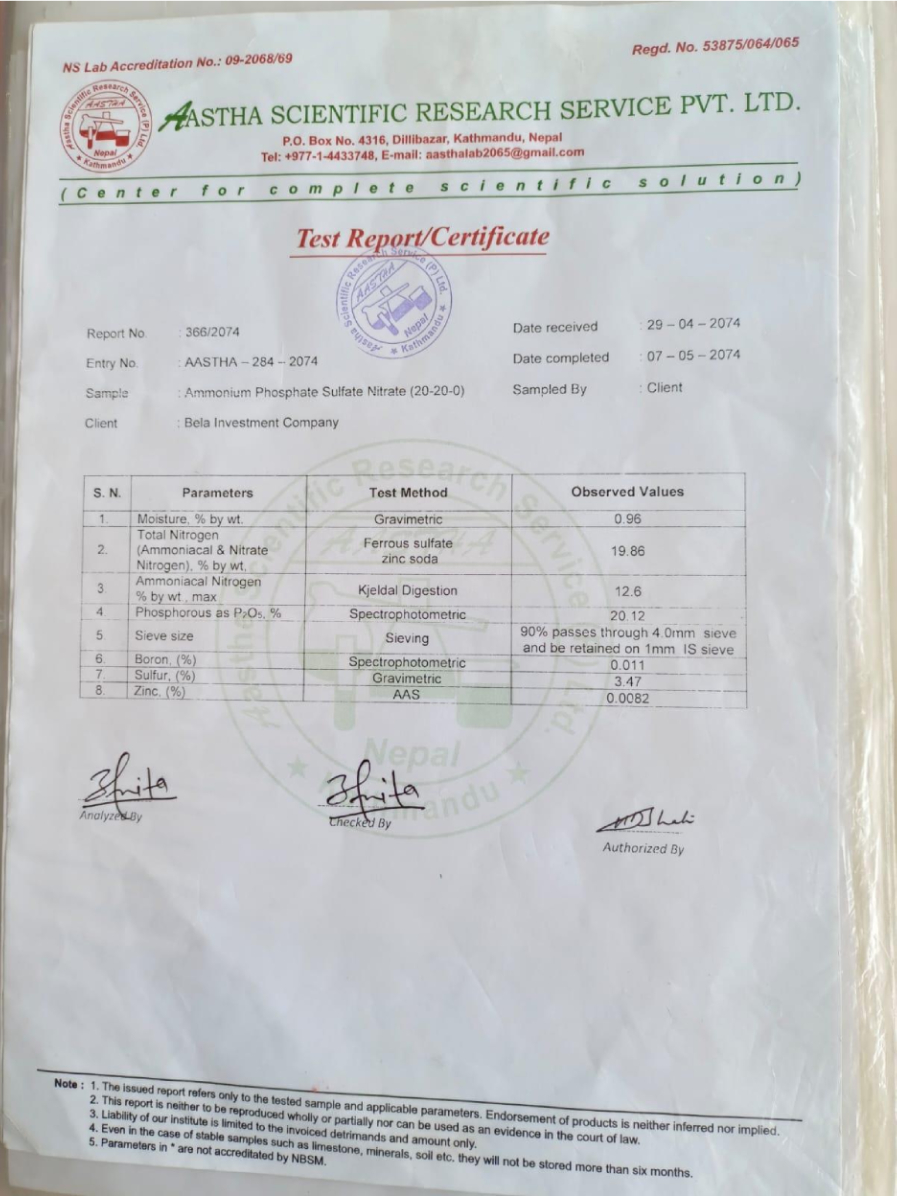
Chemical Fertilizer (20-20-0): 20-20-0 is a balanced fertilizer formulation that contains 20% nitrogen, 20% phosphorus, and 0% potassium. This fertilizer is commonly used in agriculture to provide essential nutrients to plants and improve crop yields.
The nitrogen component of 20-20-0 is essential for plant growth and is a vital component of chlorophyll, the molecule responsible for photosynthesis. Nitrogen is required in large quantities, particularly during the early stages of plant growth, to support vegetative growth, root development, and overall plant health.
The phosphorus component of 20-20-0 is essential for root development, flowering, and fruiting in plants. Phosphorus is also necessary for the transfer and storage of energy within the plant, which is critical for plant growth and productivity.
Balanced fertilizers like 20-20-0 are preferred over single-nutrient fertilizers because they provide a balanced supply of essential nutrients to plants, ensuring optimum plant growth and productivity.
Chemical Fertilizer (46-0-0): 46-0-0 is a high-nitrogen fertilizer formulation that contains 46% nitrogen and no phosphorus or potassium. This fertilizer is also known as urea, which is a synthetic organic compound made by combining ammonia and carbon dioxide. Nitrogen is an essential nutrient for plant growth and is required in large quantities to support vegetative growth, leaf development, and overall plant health. Urea is a popular source of nitrogen fertilizer because it is relatively inexpensive and easy to handle, transport, and apply.
Chemical Fertilizer (18-46-0): 18-46-0 is a high-phosphorus fertilizer formulation that contains 18% nitrogen, 46% phosphorus, and 0% potassium. This fertilizer is also known as mono ammonium phosphate (MAP) and is a water-soluble fertilizer that is quickly available to plants.
Phosphorus is an essential nutrient required by plants for root development, flowering, and fruiting. It is particularly important for young plants and those growing in soils with low phosphorus availability. MAP is often used as a starter fertilizer for young plants, as it promotes early root development and enhances the plant’s ability to absorb water and nutrients from the soil.
Nitrogen is also an essential nutrient required by plants for vegetative growth, leaf development, and overall plant health.
History & Milestones
During the 1980s, the use of chemical fertilizers in Nepal increased significantly. However, the quality of the fertilizers was often poor, and there were concerns about the environmental and health impacts of their use.
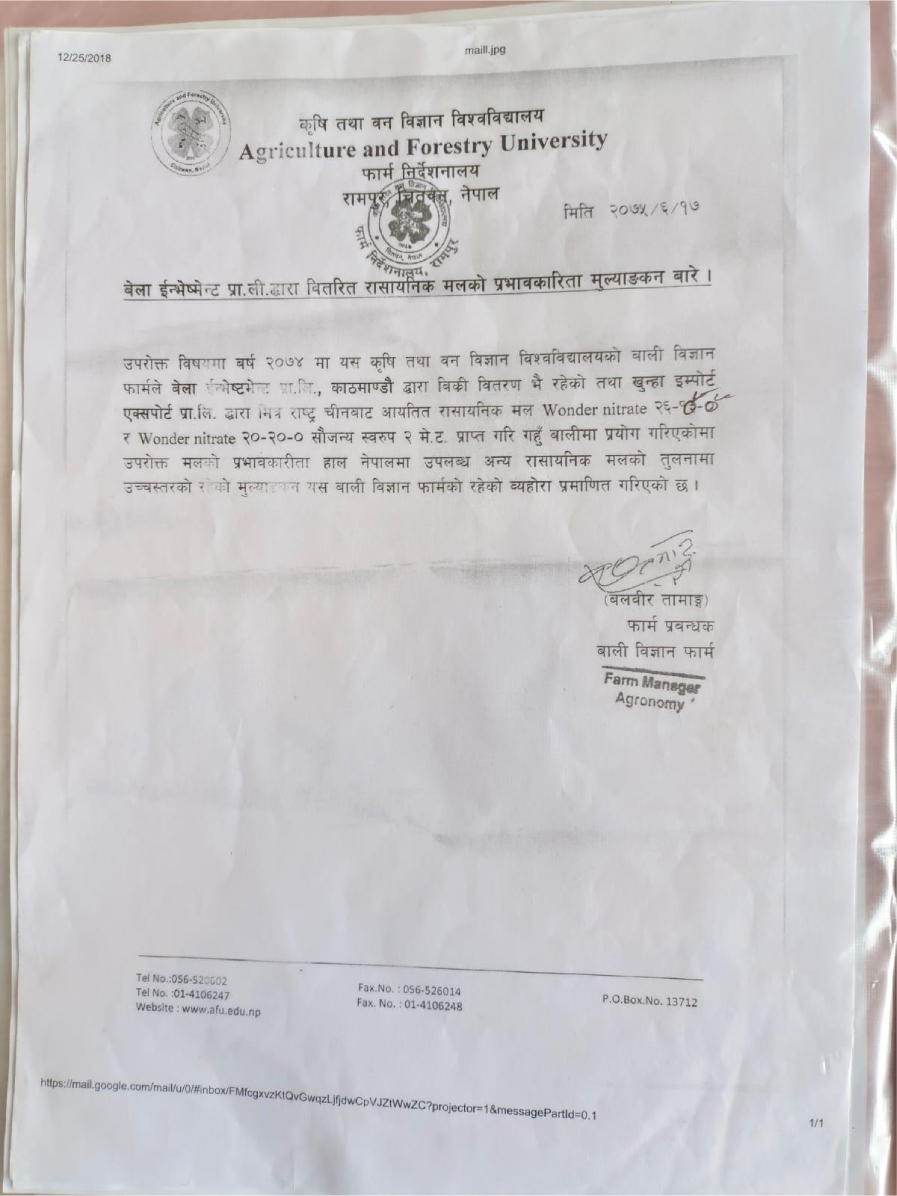
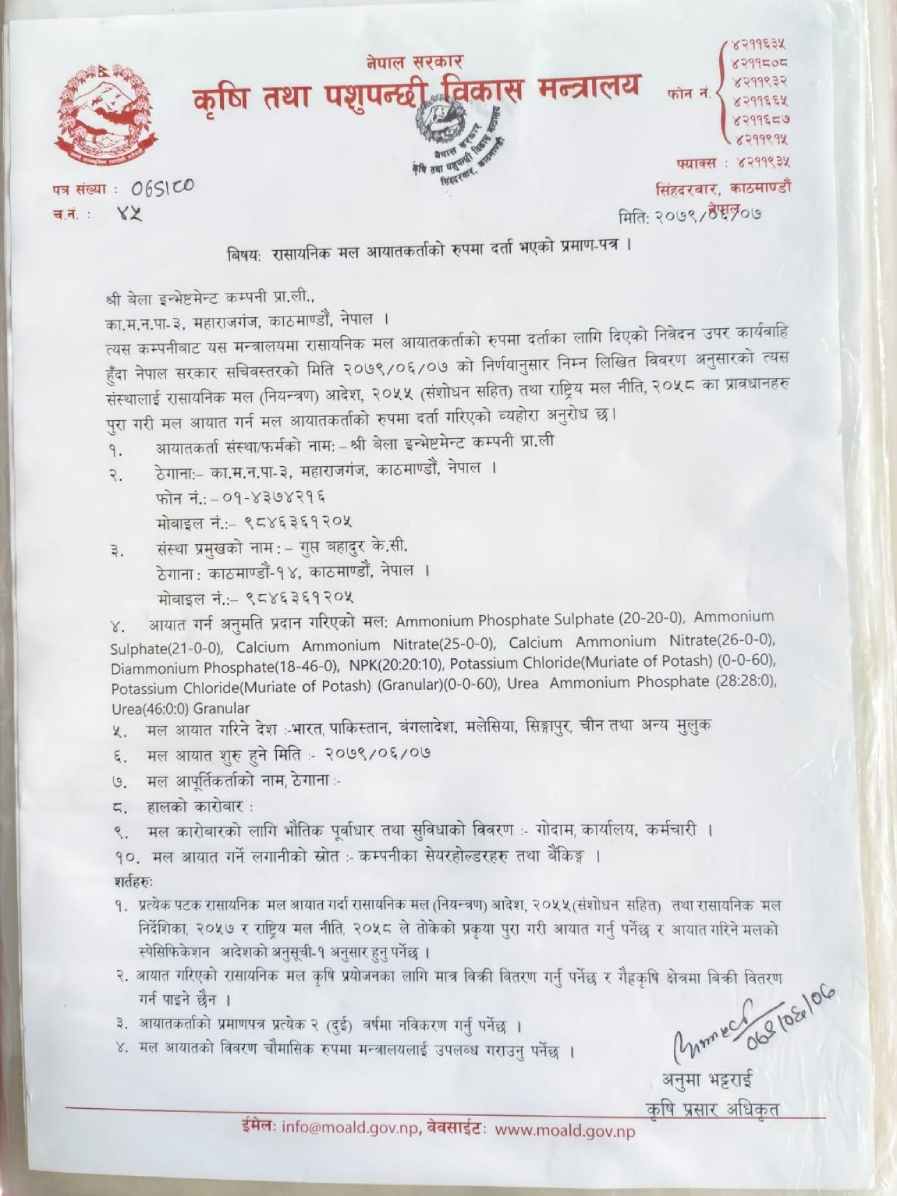
Awards and Recognitions
Core Value & Culture
The core value of chemical fertilizer in Nepal is to increase agricultural productivity and improve food security. Chemical fertilizers have been a key tool in achieving this goal, particularly in the context of Nepal’s smallholder agriculture sector. However, the use of chemical fertilizers has also raised concerns about their environmental and health impacts, leading to a growing awareness of the need for sustainable agriculture practices.
The culture surrounding chemical fertilizer in Nepal is complex and varies depending on the region and the specific farming practices being employed. In some areas, chemical fertilizers are seen as a necessary tool for increasing crop yields and improving livelihoods. In other areas, particularly those with a strong tradition of organic farming, there is a greater emphasis on sustainable and natural methods of agriculture.
There is also a growing interest in promoting the use of organic fertilizers and other natural inputs in Nepalese agriculture. This has been driven by concerns about the environmental and health impacts of chemical fertilizers, as well as a recognition of the importance of preserving soil fertility and biodiversity.
Overall, the core value of chemical fertilizer in Nepal is to increase agricultural productivity and improve food security. However, there is a growing awareness of the need for sustainable agriculture practices, and efforts are being made to promote the use of organic fertilizers and other natural inputs.